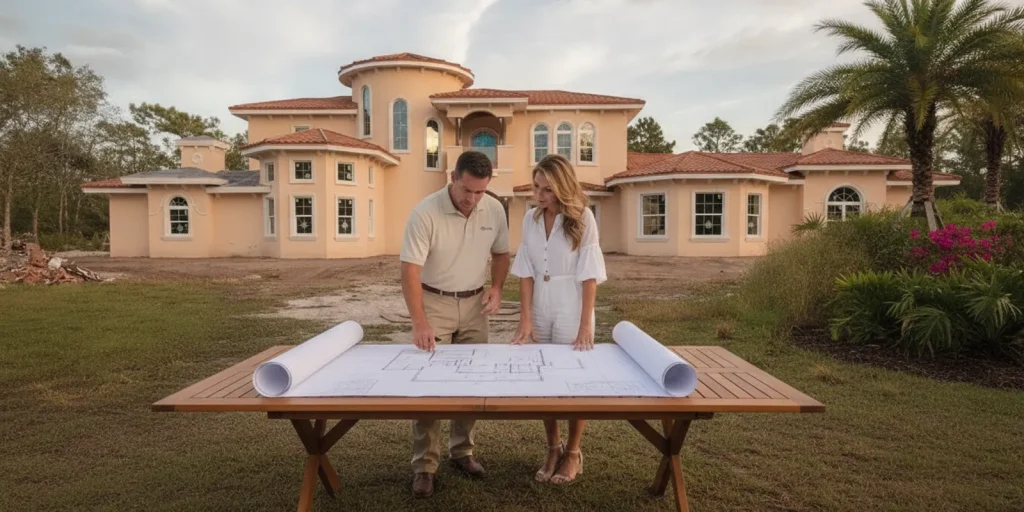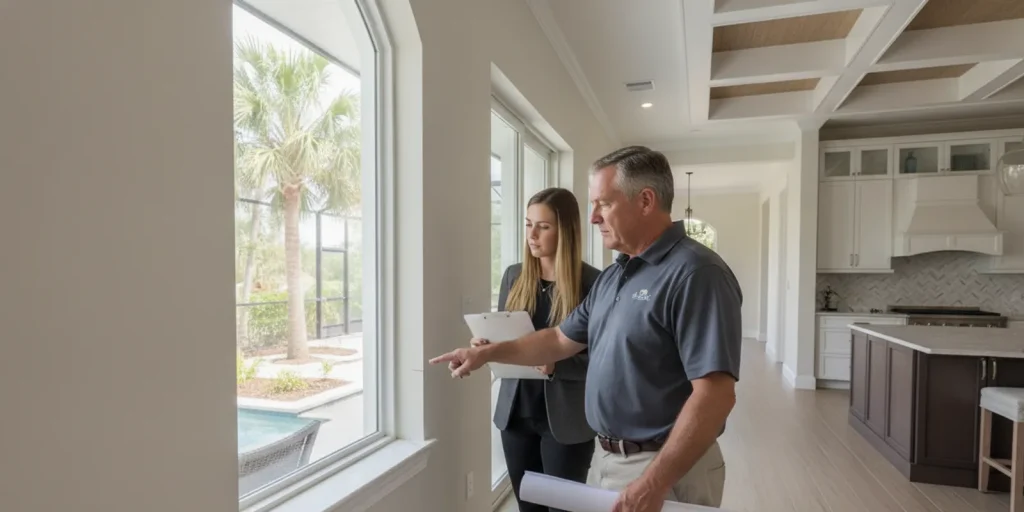


A new custom home still needs a maintenance routine. In Sarasota, heat, humidity, wind-driven rain, salt in the air near the coast and heavy seasonal downpours all make regular checks worthwhile. A new custom home maintenance plan Sarasota owners can actually follow should focus on the whole house: roof and exterior, windows and doors, drainage, concrete-related systems and mechanical equipment. Keep the plan specific to your home’s materials and equipment, then follow the manuals and project documents supplied at handover.
Talk with Net Zero Construction about planning a resilient custom home.
What should a Sarasota home maintenance plan cover?
Start with a baseline record of how the home was built and what it needs. At turnover, gather the approved plans and any as-built information, product and finish schedules, equipment manuals, warranties, inspection records, and the contact details for the contractors who installed specialized systems. Ask which items are homeowner checks and which require a licensed trade or other qualified professional. Make a calendar based on those instructions rather than assuming every home uses the same materials or equipment.
A useful plan divides the property into five areas:
- Water management: roof drainage, gutters if present, downspouts, grading, drains, and any site-specific pumps or drainage features.
- Exterior envelope: roof coverings, exterior finish, sealant joints, penetrations, flashing and transitions.
- Openings and structure: windows, exterior doors, garage doors, connections and visible concrete-related components.
- Mechanical systems: cooling, ventilation, humidity management, plumbing and electrical equipment.
- Site and records: landscaping, irrigation, pest observations, service dates, photographs and follow-up items.
That outline is a starting point, not a substitute for the home’s maintenance documents. For an overview of the way a custom-home project moves through planning and construction, see Net Zero Construction’s home-building process. It can help owners understand why construction details and maintenance responsibilities vary by project.
How should you check the exterior envelope?
The envelope separates indoor conditions from Florida’s outdoor weather. It includes the roof, exterior walls, insulation and air-control layers, windows and doors, and the transitions between them. A strong maintenance habit is to look for change: a new stain, loose material, damaged sealant, a recurring damp area or a door that no longer operates as it did. Do not wait for a small visible issue to become a leak before recording it.
Roof and wall transitions
From the ground, look for displaced or damaged roof materials, debris collecting where it should not, and visible damage to soffits, fascia or exterior finishes. Do not walk a roof unless you are qualified and have the proper safety measures. After severe weather, make a visual check from a safe location and arrange a qualified inspection if you see damage or have reason to suspect it. Watch for water marks on ceilings and upper walls, peeling finishes, or recurring dampness around roof-to-wall transitions.
Exterior walls also deserve a consistent visual check. Note cracks, open joints, damaged cladding, finish separation and areas where water appears to remain. A hairline mark in a finish and a change in a structural component are not the same thing; neither should be diagnosed from a photo alone. Record where it is, when you first noticed it, whether it changes, and whether moisture is present. Ask the builder or an appropriate qualified professional to assess concerns rather than filling or covering them without understanding the cause.
Sealants and penetrations
Look at the visible sealant around windows, doors, utility penetrations and material changes. Sealants have product-specific service lives and installation requirements, so use the product information and ask the installer what to monitor. A gap, separation, brittle surface or repeated water entry merits attention. Avoid applying a new bead over an unknown or failed joint as a quick fix; the correct repair may require removing old material, preparing the surface and selecting a compatible product.
Make a photo record of the same exterior locations each time. A dated comparison can make a slow change easier to explain to a contractor. The completed home projects page offers examples of the finished-home context in which exterior materials and design choices come together, but your own home documents determine the right maintenance products and intervals.
What should owners monitor around windows and doors?
Windows and exterior doors are part of the home’s weather barrier and structural design. Check that each sash, lock, hinge and door panel operates smoothly. Look for damaged weatherstripping, loose hardware, cracked glazing, frame movement, corrosion on exposed hardware and signs of water around the interior trim. Note any change in drafts, condensation patterns or difficulty latching. Persistent moisture or trouble opening and closing should be investigated; do not assume that an adjustment alone will resolve the cause.
Clean glass, tracks and weep paths according to the manufacturer’s instructions. Keep debris from blocking drainage openings, and use only approved cleaners and tools. Salt air can make regular gentle cleaning of exposed components especially useful for homes near the coast, but the correct method depends on the product. Avoid pressure-washing windows, sealant joints or cladding unless the product instructions specifically allow it.
After a storm, visually inspect accessible openings from indoors and outdoors when conditions are safe. Look for water intrusion, damaged screens, loose trim or hardware that does not behave normally. Photograph issues and contact the appropriate service professional. Net Zero’s pages about hurricane-resistant homes and ICF home construction explain why openings and walls should be considered as parts of an integrated system, not isolated product choices.
How do ICF walls and concrete systems fit into maintenance?
Insulated Concrete Forms create an insulated wall assembly with a steel-reinforced concrete core. That core does not make a home maintenance-free. Exterior finishes, joints, penetrations, flashing, windows and the connections to floors and roof still need attention as part of the full building envelope. Owners should monitor the finished surfaces and visible transitions, while leaving technical evaluation of structural concerns to qualified professionals.
Use the home’s plans and handover documents to identify where the project uses ICF, reinforced concrete, structural steel, engineered framing or other systems. Some homes may also use concrete floor or roof systems such as InsulDeck; that is project-specific, not a feature to assume in every house. For exposed concrete, follow the specified finish and cleaning instructions. Record a new crack, spalling, rust staining, recurring water entry or a change around a connection, and seek a professional opinion when the condition is new, growing or unexplained.
Pay attention to the building as a connected structure. A roof or floor interface, an opening, a wall penetration and a drainage detail each affect how water and forces are managed. If work is planned later, share the relevant plans and product information with the contractor and coordinate changes with the home’s architect or engineer where appropriate. For more background on structural choices, read the guide to ICF construction in Florida and the overview of choosing a structural system.
What should the HVAC and humidity routine include?
Florida homes depend on well-maintained cooling and humidity management for comfort. Follow the equipment manufacturer’s schedule for filter checks or replacement, coil and drain-line service, condensate management, and professional maintenance. The correct filter type and interval depend on the equipment and household conditions. Keep supply and return grilles clear; do not close off registers or change equipment settings in ways that conflict with the system design.
Check the area around air handlers and condensate drains for moisture, unusual odors, corrosion or visible leaks. Note unusual sounds, persistent hot or cold rooms, repeated drain backups, or a change in indoor humidity. Have a qualified HVAC professional evaluate recurring symptoms. A blocked drain or leaking component may affect finishes, so act promptly rather than waiting for the next annual service visit.
Ventilation and air sealing also interact with cooling and humidity control. If a renovation or equipment replacement is being considered, ask the appropriate professional to check sizing and compatibility with the home’s envelope instead of choosing equipment by floor area alone. Keep maintenance invoices and record the model and filter details in one place. Net Zero’s article on energy-efficient coastal home design provides more context on how envelope choices and mechanical systems work together.
How should you manage drainage and landscaping?
Walk the site after ordinary rain and, when safe, after a heavy downpour. Notice where water flows, whether downspouts discharge as intended, and whether drains or grates are clear. Look for new ponding near the house, soil washout, erosion, or water moving toward the building. Keep plantings and mulch from covering vents, weep paths, inspection points or exterior finishes. Do not change grading, drainage routes or discharge locations without checking the approved site plan and applicable requirements.
Trim vegetation so it does not rub against the exterior or block access for inspection. Check irrigation heads for overspray onto walls and windows. Keep trees and shrubs in line with the landscape plan and ask a qualified arborist about trees that have become unstable or are close to the structure. If the property includes a sump, pump, drain field or other specialized site system, use its operating instructions and service schedule; not every house has these components.
Owners preparing to build can reduce future uncertainty by discussing lot conditions and water management early. Net Zero’s resources on evaluating land for a Sarasota custom home and Sarasota building permits cover planning considerations that inform the finished property.
What seasonal checks make sense in Sarasota?
Use a recurring calendar, but let the home’s manuals, warranty terms and site conditions set the actual frequency. Seasonal checks are prompts to observe and record, not a replacement for required service. The table below gives owners a practical starting structure to customize at handover.
| When | Owner check | What to record or arrange |
|---|---|---|
| Monthly or per equipment instructions | Check HVAC filters and visible condensate areas; make sure drains and grilles are not blocked. | Filter type or service date, moisture, unusual sound, or recurring issue. |
| Before the rainy season | Look at gutters if installed, downspouts, site drains, irrigation spray and visible grading. | Obstructions, new ponding, washout, and any contractor follow-up. |
| At seasonal change | Inspect accessible windows, doors, sealant joints, exterior finish and roofline from a safe location. | Dated photos of changes, sticking hardware, gaps or water marks. |
| After severe weather, when safe | Check for visible roof, opening, finish, drainage or interior water damage. | Photos, date, location, and prompt calls to qualified professionals if needed. |
| Annually or per product schedule | Arrange the required professional maintenance for HVAC and any project-specific equipment. | Invoices, service findings, warranty documents and next due date. |
Do not climb onto the roof or enter unsafe spaces to complete a checklist. If you see a potential electrical hazard, significant water intrusion, movement or other immediate safety concern, keep clear and contact the appropriate emergency or licensed professional. The table is a recordkeeping framework, not a technical inspection standard. For aging-in-place planning, a review of home modifications discusses how adjustments to a home can support function and changing needs; its scope is adaptations, not a Sarasota maintenance schedule. Read the systematic review of home modifications for aging in place.
How can you keep maintenance records useful?
A simple home log prevents details from getting scattered across email, receipts and memory. Use a spreadsheet, binder or digital folder and keep a copy of important records in a place you can access when arranging service. For each item, capture:
- System or location, product or equipment model, and installation or handover date if known.
- Manufacturer instructions, warranty terms, maintenance frequency and who is qualified to perform the work.
- Date checked or serviced, what was observed, photographs and the name of the service provider.
- Open questions, who will follow up, and the date you plan to check back.
When you report an issue, describe the location precisely and explain what changed, when it began and whether it has happened before. Share photos and relevant records, but do not treat them as a substitute for an in-person evaluation where one is needed. Keep receipts and written recommendations, especially when work affects a roof, opening, structural element or mechanical system. If the home is being prepared for sale or an insurance review, organized service and repair records also make it easier to answer practical questions about the property’s upkeep; they do not predetermine another party’s decision.
Contact Net Zero Construction to discuss your custom-home project.
Frequently Asked Questions
How often should I inspect a new custom home in Sarasota?
Use short, recurring visual checks and schedule professional service according to product instructions, equipment manuals and warranty terms. The right interval varies by material, equipment, exposure and site. Start with the handover documents and set calendar reminders for each specific item.
Does an ICF home need exterior maintenance?
Yes. ICF describes the wall assembly, including its reinforced concrete core and insulation, but the exterior finish, sealants, penetrations, windows, roof and drainage still need care. Monitor visible changes and follow the instructions for each finish and product.
Should I inspect the roof myself after a storm?
Do not climb onto a roof. Make a visual check from a safe location after conditions allow, and contact a qualified roofing professional if you notice damage or suspect a problem. Also look for interior water marks and issues around openings.
What if I find a crack or recurring damp spot?
Photograph it, note its location and date, and record whether it changes or returns. Avoid covering it before its cause is understood. Ask the builder or a qualified professional to assess new, growing or unexplained conditions.
What is the practical next step?
At handover, turn the project’s manuals, plans and warranty information into a home-specific calendar. Check water pathways, envelope details, openings, concrete-related systems and equipment; record what you observe; and bring qualified professionals in when a condition needs diagnosis or repair. A steady, documented routine helps you respond to changes with useful information rather than guesswork.