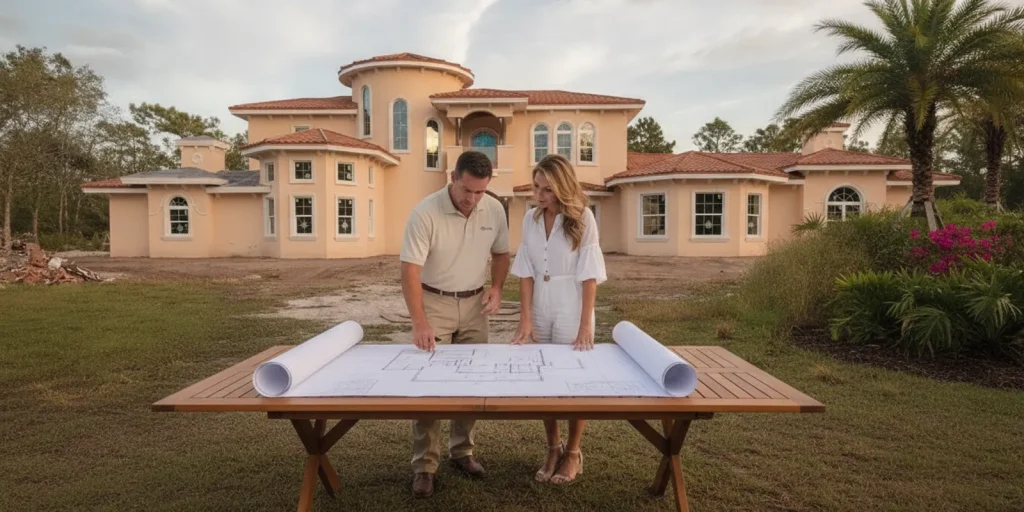

For buyers researching “custom home construction financing Florida questions,” a useful starting point is understanding how the lender’s process will fit the project. Before you commit to a lender, lot, or construction agreement, clarify what each party must provide and where decisions need to be coordinated. This is general planning information, not financial or lending advice; review your options with qualified lenders and advisors.
Talk with Net Zero Construction about your project
Why discuss financing before the plans are final?
Custom construction involves several workstreams that affect one another. The property, architectural plans, engineering, permitting, builder scope, selections, and lender requirements all contribute to a project’s financing plan. If one of those pieces changes, the lender may need updated documents or a revised review. The right time to ask questions is early enough to understand those dependencies, rather than assuming a loan can be arranged around a finished plan with no adjustments.
Start with a candid conversation about the project you are considering: where the property is, whether you own it or are evaluating a purchase, what stage the plans have reached, and which professionals are already involved. A lender can explain its own eligibility, documentation, timing, and approval process. A builder can explain how the proposed scope and construction sequence are documented. Neither conversation replaces the other.
For background on how Net Zero Construction coordinates a custom project, review the custom home building process and the company’s overview of custom home building in Sarasota. These pages can help frame project discussions, but your lender must explain the terms of any financing product.
What should you ask a lender about the loan structure?
Do not assume every construction loan works the same way. Ask the lender to describe the product under consideration in plain language, including what happens during construction and what happens when the home is complete. Some products may combine construction financing with longer-term financing; others may treat those stages separately. Availability, qualification, fees, and terms depend on the lender and borrower.
- Is this a construction-only loan, a construction-to-permanent arrangement, or another structure?
- What are the steps to move from application to approval, closing, construction funding, and any later conversion or payoff?
- Which interest, payment, fee, and rate details should I compare, and how may they change under the agreement?
- What borrower contribution, reserves, or other assets does your process require me to document?
- What happens if the project scope, plans, builder, or completion assumptions change after approval?
- Are there limits or conditions concerning the property, builder, plans, or loan amount that I should understand before proceeding?
Ask for the lender’s answers and required next steps in writing. If a term is unfamiliar, ask the lender to define it and explain how it applies to your situation. You can also review general consumer-finance information at the Consumer Financial Protection Bureau; for a specific loan, rely on the lender’s current disclosures and qualified advice.
How will the lender coordinate construction draws?
A draw is a release of loan funds under the lender’s process as work progresses. The schedule, evidence, review method, and release timing are lender-specific, so ask for the details before building begins. A builder’s construction schedule and payment terms are related to the lender’s process, but they are not automatically identical. Put both sets of requirements on the table and identify mismatches early.
Useful questions include:
- How many funding stages does the lender anticipate, and what work or documentation is associated with each one?
- Who requests a draw, who inspects or reviews the work, and what records are required?
- How much notice is needed before a review, and what is the lender’s process for approving and releasing funds?
- What happens when a stage is partly complete, a requested item is missing, or an inspection identifies a question?
- How should invoices, change approvals, lien-related documents, and evidence of completed work be submitted?
- Are there lender-specific procedures for deposits, stored materials, allowances, or items purchased directly by the owner?
Then ask the builder how its contract, billing milestones, and project records are organized. The aim is to make the parties’ expectations visible, not to assume that the builder can control the lender’s review or release timing. Net Zero Construction works with a homeowner’s architects and structural engineers as the project is developed; review the company background and discuss who will prepare or supply each document for your particular project.
Which project documents should you clarify in advance?
Ask the lender for a complete, current list of documents and confirm who is responsible for each item. Requirements may differ according to the property, loan, project status, and lender. A list also helps keep the lender’s file aligned with the working project documents instead of relying on an outdated plan or assumption.
- Property information: Ask what site, ownership, survey, title, access, and other property records the lender will need. For a Florida lot, confirm with your project team which zoning, permit, flood-map, and elevation questions must be resolved for the proposed home.
- Plans and specifications: Clarify whether preliminary or permit-ready plans are needed, which revisions must be reported, and how the lender handles changes in scope or selections.
- Builder and contract records: Ask what information about the builder, contract, scope, schedule, and payment structure is required. Confirm who will submit each item and when updates are due.
- Engineering and permitting: Find out what engineering, permit, or approval records the lender expects and whether these must be in place before a particular financing step.
- Budget support: Ask how the lender wants the project budget presented, how allowances and owner selections are treated, and how updates should be documented.
- Borrower records: Obtain the lender’s current list of personal financial and other application materials directly from that lender.
For site-specific planning, use the project team to coordinate property research and permitting questions. Net Zero Construction’s guides to land for a custom home in Sarasota and Sarasota custom home permits can help you prepare questions for the builder, architect, surveyor, geotechnical professional, and engineers. The lender remains the source for its own document requirements.
How should you plan for contingencies and changes?
Custom homes involve decisions that may evolve as plans, site information, engineering, permitting, and selections are resolved. Before choosing a financing path, ask how the lender expects a contingency to be shown and what steps are required if costs, scope, or timing change. Do not assume a contingency is automatically available, accepted by the lender, or sufficient for every project condition.
Discuss these questions with both the lender and builder:
- How should the working budget distinguish defined scope, allowances, owner selections, and contingency?
- What written approval is needed before a change is made or additional work is authorized?
- How are changes reflected in the project budget, contract records, draw requests, and lender file?
- What is the process if a permit comment, site finding, engineering decision, or material selection changes the scope?
- Which decisions have to be made before closing or before construction funding begins?
- Who should be notified when a change affects documents already submitted to the lender?
Good recordkeeping matters. Keep dated versions of budgets, plans, approvals, selections, and lender communications. Ask each party to identify the current version and the person responsible for communicating revisions. For more on organizing project decisions, see the guide to custom home change orders in Sarasota.
How can you compare financing approaches?
The comparison below is a conversation guide, not a recommendation. Product names can conceal important differences, and lenders may use different terms. Ask each lender to describe its actual offer and provide the applicable disclosures. Compare the complete process as well as the headline rate or payment information.
| Financing approach to ask about | Questions to clarify | Coordination point |
|---|---|---|
| Construction-only financing | What are the construction-period terms, maturity or payoff requirements, and next financing step? | Understand how later financing would be arranged and what costs or approvals may apply. |
| Construction-to-permanent financing | When and under what conditions does the permanent phase begin? Which terms are fixed or subject to change? | Confirm how project completion, documentation, and any conversion conditions are handled. |
| Cash or a combination of funds | How will funds be documented, timed, and coordinated with lender requirements, if a loan is also involved? | Align the planned source and timing of funds with the contract and construction payment schedule. |
| Another lender-specific structure | What are the eligibility rules, fees, draw process, documentation, and conditions for changes? | Request a written explanation and compare it against the project’s actual scope and records. |
For each option, record the lender’s answers, unresolved questions, documents still needed, and next decision date. Ask how the lender defines any quoted terms and whether the explanation reflects the current project information. A side-by-side record is more useful than trying to compare products from a short summary alone.
When should the lender be brought into the project conversation?
There is no single sequence that fits every property and lender. Ask the lender which milestones matter in its process and what it needs to review at each one. Then compare those milestones with your project team’s work: property review, plan development, engineering coordination, permitting preparation, contract development, and construction. This is a way to identify dependencies, not a promise about how long any stage will take.
Consider maintaining a short coordination log with four columns: item, responsible person, document or decision needed, and next follow-up. For example, a lender may need a particular version of the plans, while the architect or engineer is still working through revisions. The log helps you ask whether the lender needs a preliminary copy now or a later finalized version. Confirm the answer with the lender rather than assuming the draft is acceptable.
Before you sign a contract or make a significant commitment, ask qualified professionals to explain which financing and project conditions remain open. A lender can clarify its approval conditions; your attorney or other advisor can explain contract obligations; the builder can describe the proposed scope and process. Keeping those roles distinct makes it easier to see what has actually been approved and what still needs resolution.
What should you align with the builder?
Financing discussions work best when the builder’s scope and the lender’s process are described consistently. Ask the builder what the current scope includes, what remains undecided, what assumptions affect the working budget, and how revisions are communicated. Ask the lender which versions of those records it has and when it needs updates. When they disagree, ask the relevant parties to clarify the discrepancy before treating an item as settled.
For a coastal Florida custom home, the project also involves coordination among the property, architecture, engineering, permitting, and construction. Net Zero Construction collaborates with a client’s design and engineering professionals; confirm roles rather than assuming all project services are provided by one firm. The home-building overview and client information offer additional context for a first conversation.
A simple preparation folder can include the property address or parcel details, current plans, the working scope, known project-team contacts, lender document checklist, written questions, and a log of changes. Share sensitive personal financial records only through the lender’s approved channels. Keep project records organized and ask professionals how they want information delivered.
Discuss your custom home plans with Net Zero Construction
Frequently Asked Questions
Should I talk to a lender before buying a lot?
It can be useful to learn what a lender needs before you make commitments, but the lender must advise you about its own process and qualifications. At the same time, ask the builder and relevant property professionals to review site, zoning, flood-map, elevation, access, and permitting questions. A financing discussion does not replace property due diligence.
Can a builder tell me which construction loan to choose?
A builder can explain how a proposed construction scope, schedule, and documentation may interact with the project. Loan eligibility, rates, fees, and contractual terms should be explained by qualified lenders and advisors. Compare written information from lenders and consider your individual circumstances.
Does the draw schedule set the construction schedule?
Not necessarily. The lender’s draw requirements and the builder’s construction schedule serve related but distinct purposes. Ask the lender and builder to explain their processes, review intervals, required records, and how they will communicate if a change affects either schedule.
What is the best first step?
Ask prospective lenders for their current construction-financing process and document checklist, then discuss the project scope and coordination needs with your builder. Keep the questions, answers, and next steps in writing so you can make informed decisions with your qualified professional team.
Careful coordination before construction can make financing discussions clearer and help the lender, builder, and project professionals work from consistent information.